Watching a Solar Eclipse Safely and Well
How solar eclipses actually work, why certified filters are non-negotiable, and how to plan travel, timing, and photography for a totality you will remember for the rest of your life.
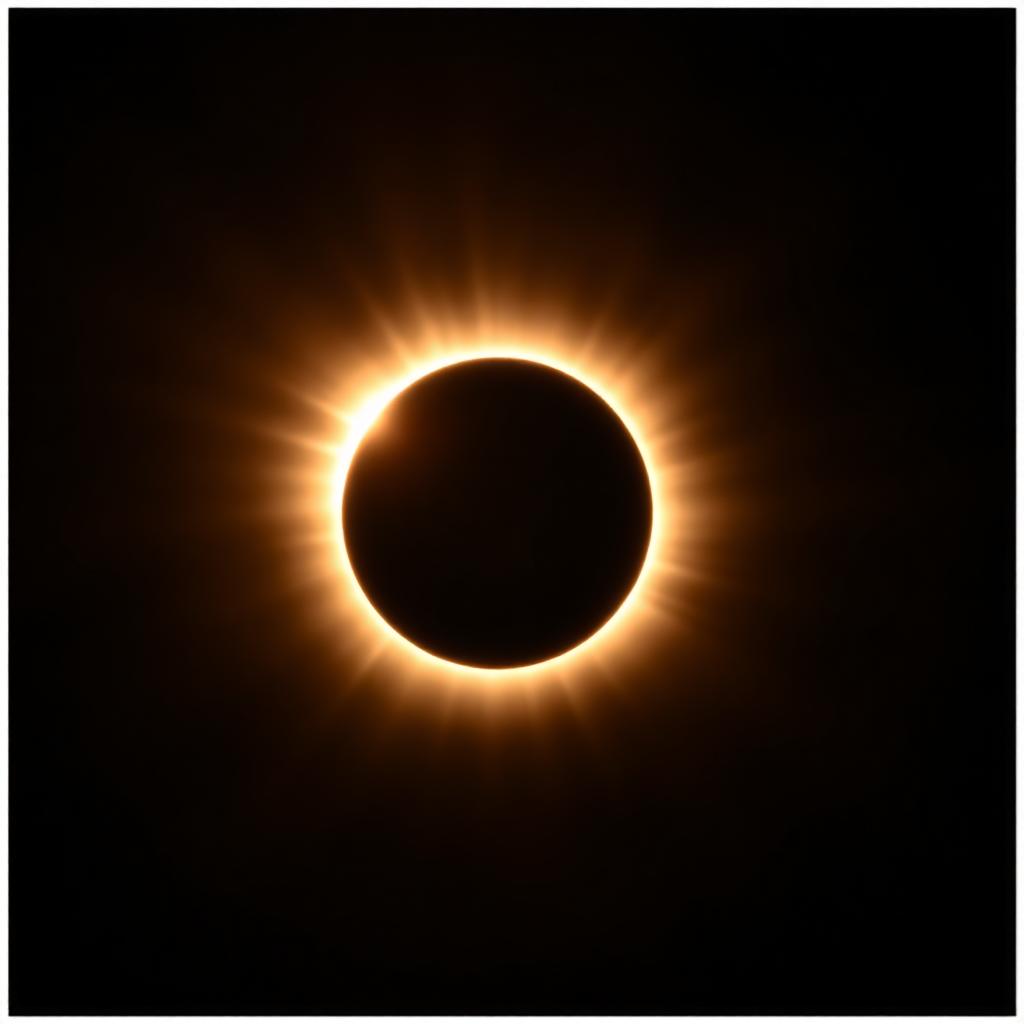
A total solar eclipse is the most spectacular natural event visible from Earth. For a few minutes, the Moon exactly covers the Sun's disk, revealing the ghostly pearl-white corona, planets appear in a darkened daytime sky, and the temperature drops noticeably. People who have travelled specifically to see totality frequently describe it as the most emotionally powerful experience of their lives. It is also the most misunderstood and, if handled carelessly, the most dangerous event to observe.
A solar eclipse happens when the New Moon passes precisely between the Sun and Earth, casting its shadow across our surface. The Moon's shadow has two parts: the wide, partial-shadow penumbra, from which viewers see a partial eclipse, and the narrow, deep-shadow umbra, from which viewers see totality. The umbral shadow race across Earth's surface at over 1,500 kilometres per hour and, depending on geometry, may last only a few minutes at any one location.
The two eclipses within one
Only totality is safe to view without a filter, and only during the brief seconds or minutes when the Sun's disk is completely covered. At every other moment, including during a 99% partial eclipse, the exposed sliver of the Sun's photosphere is bright enough to permanently damage your retina, silently and without pain. Never look at the partial phases with the naked eye, sunglasses, exposed film, or any improvised filter. The only acceptable equipment is a certified solar filter marked ISO 12312-2.
Eclipse glasses that meet this standard cost a few dollars per pair; there is no reason not to buy them well in advance from a reputable retailer. Inspect each pair for scratches or holes before use. For a telescope or camera, front-of-tube solar filters (never eyepiece filters) are the only safe option and must be securely fixed against wind and accidental removal.
Planning travel to the path of totality
A partial eclipse is interesting; totality is unforgettable. If you have any choice at all, travel into the umbral path even if that means a several-hour drive. The perceptual difference between 99% coverage and 100% coverage is enormous and cannot be exaggerated. Choose your specific site with three variables in mind: the duration of totality at that location, the historical cloud cover for that date, and the ease of escape if the local forecast turns against you the day before.
For popular eclipses, book accommodation a year or more in advance. Roads within 50 kilometres of the centreline routinely gridlock on eclipse morning and remain gridlocked for hours afterwards. Bring extra fuel, food, and water. Local infrastructure in small towns is typically overwhelmed. Treat the whole thing as a lightweight expedition rather than a day trip.
The choreography of totality
In the ten minutes before totality, watch for the darkening light, sharpening shadows, and, if the ground has a suitable surface, the mysterious rippling bands of shadow known as shadow bands. As totality approaches, the last few beads of sunlight shining through lunar valleys produce Baily's beads and, finally, the diamond ring effect. At that exact moment, filters come off and the corona blazes into view. Filters go back on the second the first bead reappears at the end.
Resist the temptation to spend all of totality behind a camera. Set your camera on a tripod, program a bracketed exposure sequence, and then step away from the eyepiece to look at the sky with your own eyes. The corona is enormous, three-dimensional, and etched with delicate streamers you will only ever remember, never photograph exactly. Multiple veterans of dozens of eclipses will tell you the same story: enjoy the sky first, photographs second.
After the eclipse
Traffic leaving totality is famously worse than traffic entering it, because everyone leaves simultaneously the second the Sun reappears. Consider staying at your site for an hour or two afterwards; watch the partial phases in reverse, share views through your filtered scope with strangers, and let the road empty a little. This also lets your own emotions settle. Many first-time observers describe an unexpected sense of loss as totality ends.
Then start planning the next one. Eclipse dates are predicted centuries in advance with astonishing precision. Most experienced eclipse chasers agree that the second and third totalities they observed were more rewarding than the first, because they knew what to watch for. The universe has scheduled these events for you already; all you have to do is show up.