Observing the Sun Safely: Sunspots and the Solar Cycle
The only target that can blind you in a second is also the only star you can watch change from day to day. Filters that are safe, filters that are dangerous, and what to look for.
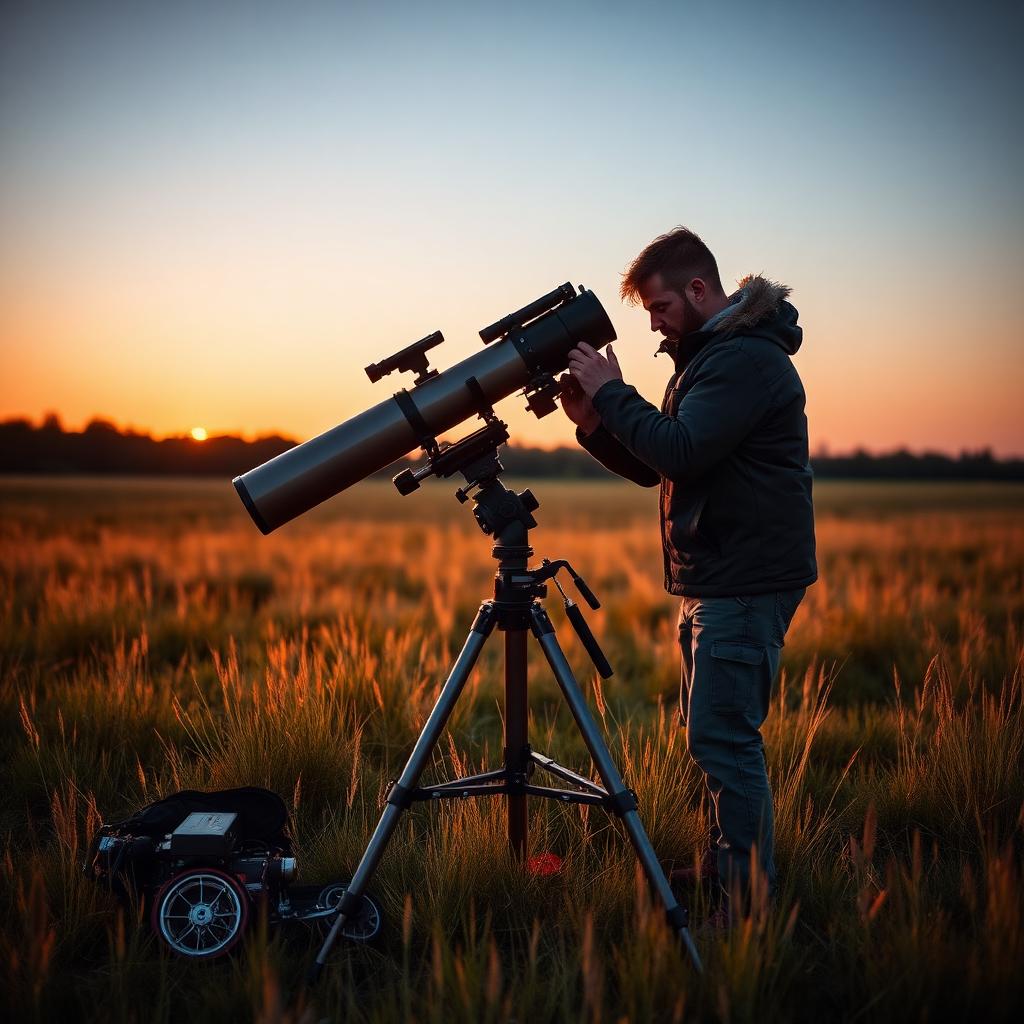
Solar observing occupies a strange position in amateur astronomy. It requires no dark sky, no late night, no drive out of town, and no dark adaptation; you can do it from a city balcony at lunchtime. It is the only branch of the hobby where the target visibly changes over hours, so a session today genuinely differs from a session yesterday. And it is the only branch where a careless mistake causes permanent, painless, irreversible injury within a second.
Both halves of that sentence deserve equal weight. Thousands of amateurs observe the Sun safely every day using well-understood equipment and simple discipline. The danger is not mysterious and it is not a matter of luck — it comes from a small number of specific errors, all of which are easy to avoid once you know what they are.
Safety, stated once and without hedging
For naked-eye viewing, use only eclipse glasses or handheld viewers certified to ISO 12312-2, and inspect them for scratches or pinholes before every use. For a telescope or binoculars, the filter must be a full-aperture filter mounted on the front of the instrument, so that sunlight is attenuated before it enters the optics. Never use a filter that screws into the eyepiece end: the telescope concentrates the full unfiltered energy of the Sun onto that filter, which can crack without warning while your eye is at the eyepiece.
Three further rules. Cap or remove your finder scope — it is a small telescope pointed at the Sun and it will burn whatever is behind it, including your face as you lean past. Never leave an aimed instrument unattended, especially where children can reach it. And never look through anything at the Sun using welding glass of unknown grade, exposed film, smoked glass, sunglasses stacked together, or a CD; these attenuate visible light while passing infrared and ultraviolet, which is precisely the wrong failure mode, because your retina has no pain receptors to warn you.
White light: spots, granulation and limb darkening
With a safe front-mounted filter, the first thing you notice is that the visible surface is not uniform. Sunspots appear as dark cores, called umbrae, surrounded by lighter feathery penumbrae, usually clustered into groups that can span several Earth diameters. They look black only by contrast; a sunspot in isolation would still be far brighter than the full Moon. They are regions where intense magnetic fields locally suppress convection and let the surface cool by a couple of thousand degrees.
Look also for granulation, the fine mottled cell pattern of rising convective columns, which needs steady air and good optics to resolve. Notice that the disc dims noticeably towards the edge — limb darkening, caused by your line of sight passing through cooler, higher layers near the rim. Bright faculae are often visible near the limb too. Best of all, sketch a spot group on consecutive days and watch it carry around the disc: the Sun rotates in roughly 27 days at the equator, and you can measure that yourself.
Hydrogen-alpha and the chromosphere
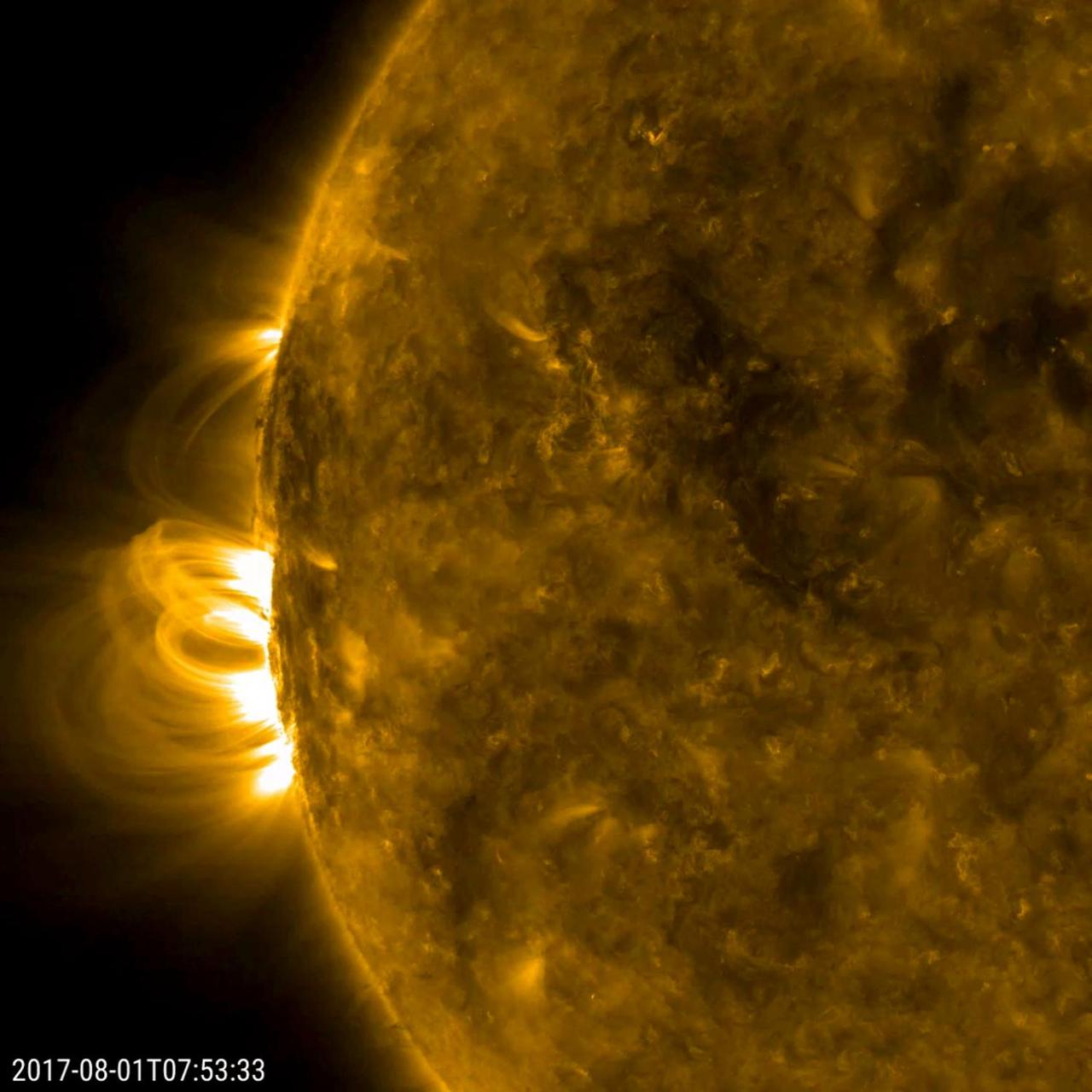
A narrowband hydrogen-alpha filter isolates a single deep-red emission line and shows a completely different Sun — not the visible surface but the thin chromosphere above it. Prominences arc off the limb like loops of flame, filaments snake dark across the disc, bright plage regions surround active areas, and occasionally a flare brightens over minutes while you watch. Nothing else in amateur astronomy changes this fast.
The catch is cost. True H-alpha requires a bandwidth of around one angstrom, achieved with an etalon or a stack of precision filters, and dedicated solar telescopes start at several hundred and climb steeply. A reasonable path is to spend a year in white light with an inexpensive full-aperture film filter first. If you find yourself going out every clear morning, the upgrade will feel justified; if not, you have saved a great deal of money.
The solar cycle and why it reaches the ground
Sunspot numbers rise and fall on a cycle averaging about eleven years, and tracking that cycle yourself is one of the most satisfying long projects available to an amateur. Near minimum you may go weeks with a blank disc; near maximum a dozen groups can be visible at once. Two published indices let you cross-check your own counts: the relative sunspot number and the 10.7 cm solar radio flux, both of which our Solar Activity Checker pulls from public NOAA feeds.
There is structure inside the cycle. Spots emerge at mid-latitudes early on and appear progressively closer to the equator as the cycle matures, a drift known as Spörer's law that produces the famous butterfly diagram. The Sun's magnetic polarity also flips at each maximum, so the full magnetic cycle is around twenty-two years. This matters beyond the eyepiece: active periods bring more flares and coronal mass ejections, which means more aurorae at lower latitudes, more radio disruption, and more atmospheric drag on satellites in low orbit.