Light Pollution, the Bortle Scale, and What You Can Still See
How skyglow actually degrades your view, what each Bortle class really looks like at the eyepiece, and a realistic list of targets that survive a bright suburban sky.
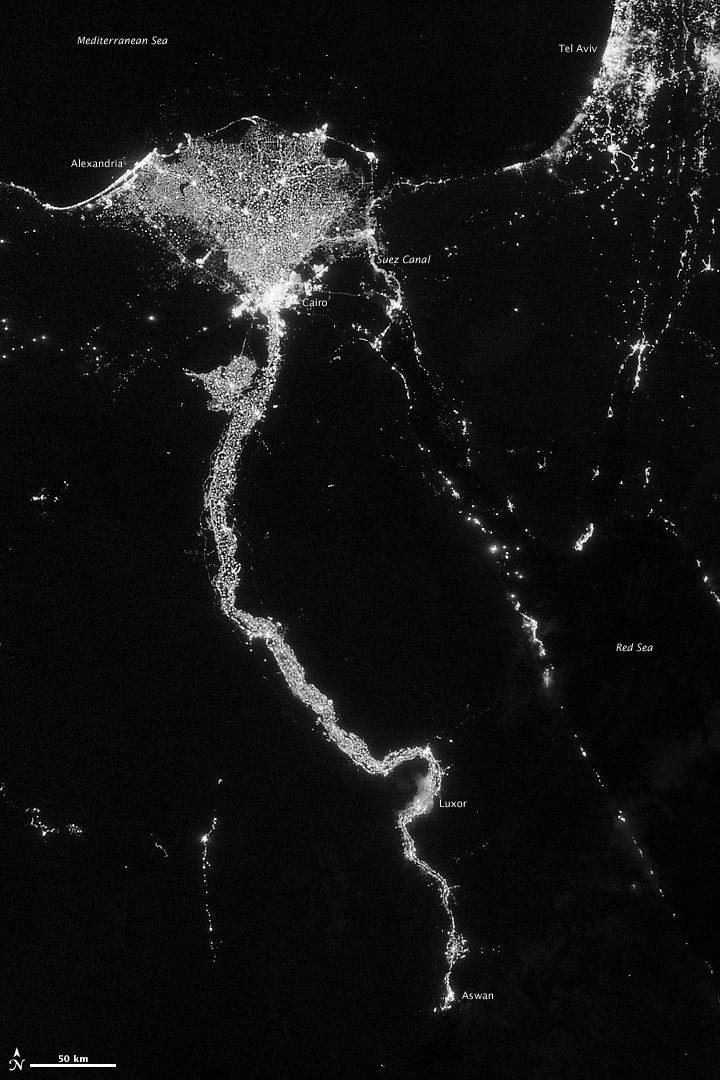
More than eighty percent of the world's population now lives under a light-polluted sky, and a large majority of people in North America and Europe have never seen the Milky Way from home. This is not a moral failing on anyone's part; it is the accumulated result of billions of individually reasonable decisions to install a light. But it does mean that the sky described in older observing books, full of faint nebulae and naked-eye galaxies, is not the sky most beginners actually step out into.
The mechanism is straightforward. Artificial light scatters off air molecules and aerosols and comes back down as a diffuse glow, raising the background brightness of the whole sky. Your eye detects objects by contrast against that background, not by absolute brightness, so skyglow does not dim the target — it raises the floor the target has to stand on. Stars, being points, punch through reasonably well. Extended faint objects like galaxies and large nebulae simply dissolve.
The Bortle scale in plain language
John Bortle's nine-point scale is the standard shorthand. Class 1 is a genuinely pristine site where the Milky Way casts visible shadows and the zodiacal light spans the sky. Class 4 is a rural-suburban transition where the Milky Way is obvious overhead but washed out near the horizon. Class 7 is a typical suburb: the sky is grey rather than black, the Milky Way is invisible, and only the brightest few dozen deep sky objects remain findable. Class 9 is an inner city where perhaps twenty stars are visible at all.
Two measurable proxies are more useful than eyeballing a class. Naked-eye limiting magnitude, the faintest star you can hold steadily near the zenith, runs from about 7.8 at Class 1 to under 4.0 at Class 9. Sky quality meters read the same thing in magnitudes per square arcsecond, from around 22.0 at the best sites to below 18.0 downtown. Note that each whole magnitude represents a factor of about 2.5 in brightness, so the difference between classes is far larger than the numbers suggest.
What survives under a bright sky
Skyglow is almost irrelevant to the Moon, the planets, and double stars, because these are high-surface-brightness targets whose contrast against the background barely changes. A Class 8 balcony can deliver a superb view of Saturn's rings, Jupiter's belts, lunar craters along the terminator, and the colour contrast of Albireo. Bright open clusters and globulars such as M13, M15, and the Double Cluster hold up well. Carbon stars, which are deep orange-red, look identical from anywhere.
Narrowband nebula filters help, but only for the objects they are designed for. An OIII or UHC filter passes the specific emission lines of ionised gas while blocking much of the broadband skyglow, which can make the Veil or the Ring Nebula appear from nothing. They do essentially nothing for galaxies and reflection nebulae, which shine by broadband starlight — filtering the sky filters the target equally. No filter has ever recovered a galaxy from a bright sky, whatever the marketing says.
Practical mitigation tonight
Most of what ruins a suburban session is not distant skyglow but local glare: a neighbour's security floodlight, your own porch bulb, a streetlight in your peripheral vision. Blocking direct light with a fence, a hedge, a parked car, or a simple cloth screen will do more for your view than a hundred-dollar filter. Give yourself at least twenty to thirty minutes of full dark adaptation, and protect it with a dim red torch — one glance at a phone screen in white mode resets the clock.
Observe as close to the zenith as your target allows, since you are looking through the least air and the thinnest column of scattered light there. Waiting for an object to reach its highest point can be worth a full magnitude. A dark hood or towel over your head at the eyepiece removes stray light entering from the side and is startlingly effective. Finally, check the Moon: a gibbous Moon adds far more skyglow than most cities, and our Moon Phase Calculator will tell you which nights to save for galaxies.
The part that outlasts your session
Light pollution is unusual among environmental problems in that it is instantly and completely reversible — switch the light off and the sky returns the same night. The fix is not darkness but design: fully shielded fixtures that throw light downward where it is needed, warm colour temperatures below 3000K, sensible brightness levels, and timers or motion sensors so lights are on only when a human is present. These changes typically save money, which makes them unusually easy to argue for.
If you want to help beyond your own garden, DarkSky International maintains model lighting ordinances that local councils can adopt more or less verbatim, and citizen-science projects such as Globe at Night collect naked-eye limiting magnitude reports that build the long-term record. Meanwhile, keep observing from where you are. Plenty of accomplished amateurs have logged all 110 Messier objects from suburban gardens; it takes patience and technique rather than a plane ticket.