Constellations, Stories, and How to Actually Learn the Sky
Why memorising constellations feels impossible at first, the shortcuts real observers use, and how ancient mythology still helps modern amateurs orient themselves under any sky.
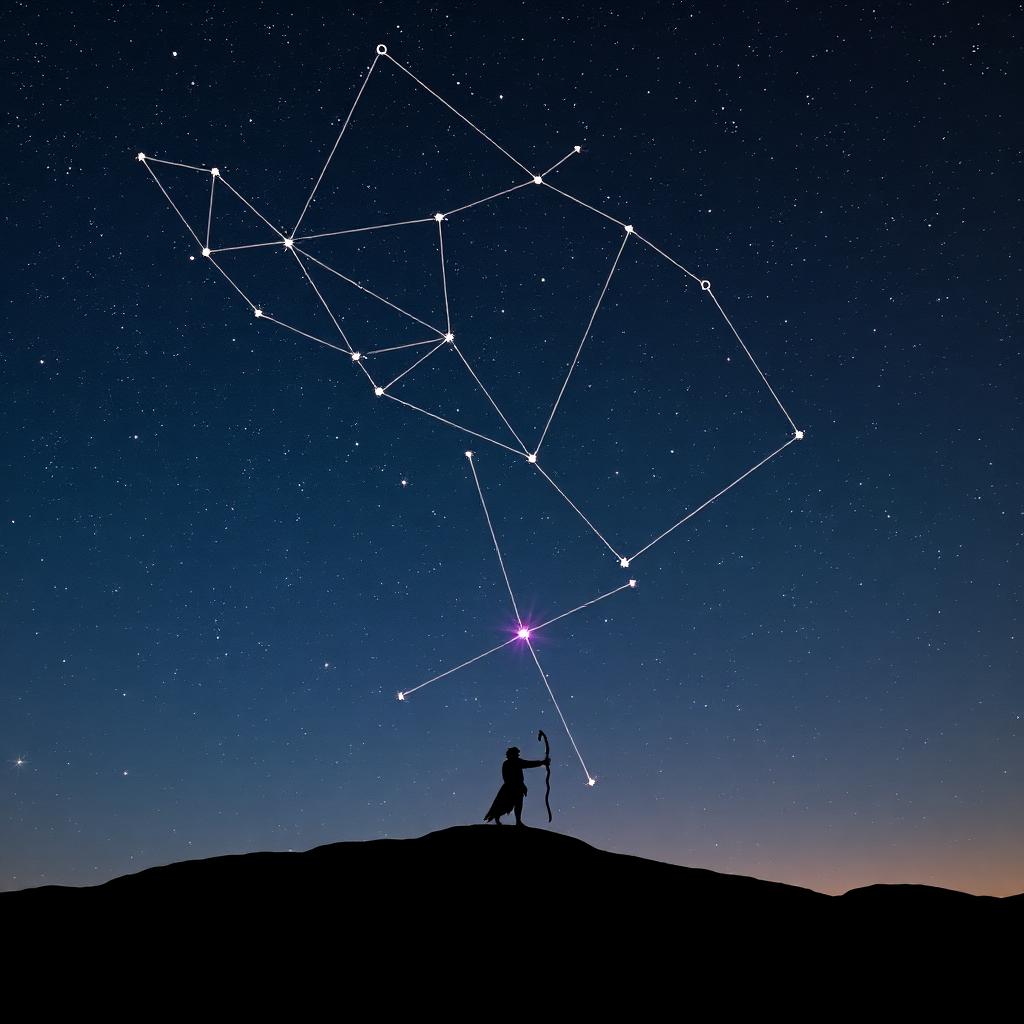
Every experienced amateur astronomer once stood outside on a dark night looking up at what felt like a chaos of scattered dots, wondering how anyone could possibly recognise anything in that mess. Learning the constellations feels intimidating precisely because it is not really about memorisation; it is about pattern recognition, and pattern recognition is a skill that grows on its own timeline. The trick is knowing which handful of anchor patterns to start with rather than trying to swallow the whole sky at once.
Modern astronomers officially recognise 88 constellations, dividing the sky into non-overlapping regions the way countries divide a map. Most of these regions are faint, obscure, or invisible from any given latitude. You never need to know 88. Learning about 15 core constellations will let you find your way around the naked-eye sky for the rest of your life, and everything else can be picked up gradually as required.
Start with the seasonal anchors
Every night sky has one dominant seasonal figure that once found makes everything else easier. In northern winter, that anchor is Orion, with its unmistakable belt of three evenly spaced stars. From Orion you can find Sirius, Aldebaran, Betelgeuse, Rigel, and the Pleiades within minutes. In summer the anchor is the Summer Triangle formed by Vega, Deneb and Altair, spanning three separate constellations across the arch of the Milky Way.
Spring gives you the Big Dipper's handle pointing to Arcturus and onward to Spica; autumn hands you the Great Square of Pegasus. Learn these four seasonal keys and you can always orient yourself no matter what time of year, what time of night, and what latitude you are observing from. Each anchor unlocks its own neighbourhood of stories and objects.
Why mythology still helps
Modern astronomy no longer needs constellations for navigation, calendars, or myth. Yet the traditional stories tied to them are still one of the most efficient memory devices ever invented. Orion the Hunter is chased by Scorpius, so the two are always on opposite sides of the sky and never visible together. Cassiopeia sits nearly opposite the Big Dipper and rotates around the pole opposite to it. The old narratives encode astronomical relationships in a form the human brain finds effortless to retain.
Different cultures assigned different stories to the same stars, and it is worth reading a few of them. The Māori Matariki (the Pleiades), the Chinese Twenty-Eight Mansions, the Egyptian decans, and the Greek myths all describe the same sky in radically different ways. There is no single correct interpretation; each is a lens on the same photons, and each rewards the observer who has learned to see the underlying patterns.
Techniques that accelerate learning
Use a red-lit planisphere or a phone app in strict red night mode. Set the date and time and physically hold the chart over your head oriented to the horizon; the sky will click into place in a way that a flat page on a table never manages. Then put the tool down and try to reproduce what you just saw without it. Testing yourself out loud is dramatically more effective than passive reading.
Sketch what you see. You do not need artistic talent. A rough dot-and-line diagram, made under the actual sky in a small notebook, cements the arrangement of stars in a way no photograph can match. Sketch the same constellation on ten different nights across a season and you will notice its slow drift westward relative to the Sun, which is the whole ancient basis of the calendar.
Beyond the 88
Once the seasonal anchors feel natural, the sky begins to fill in. Faint constellations such as Lyra, Corona Borealis, Delphinus, or Sagitta will start jumping out at you rather than hiding. You will find yourself recognising bright stars by name before you consciously think about it. This is the transition from tourist to native. From here, every clear night becomes an old friend rather than an unfamiliar territory.
The final and least discussed step is teaching someone else. There is no faster way to consolidate what you know than to point at the sky, name each object, and explain what makes it interesting to a friend who has never noticed. Astronomy is contagious; the constellations you learn tonight will still be there for the person you introduce tomorrow, and the pattern of the sky will keep faithfully repeating for the rest of both your lives.