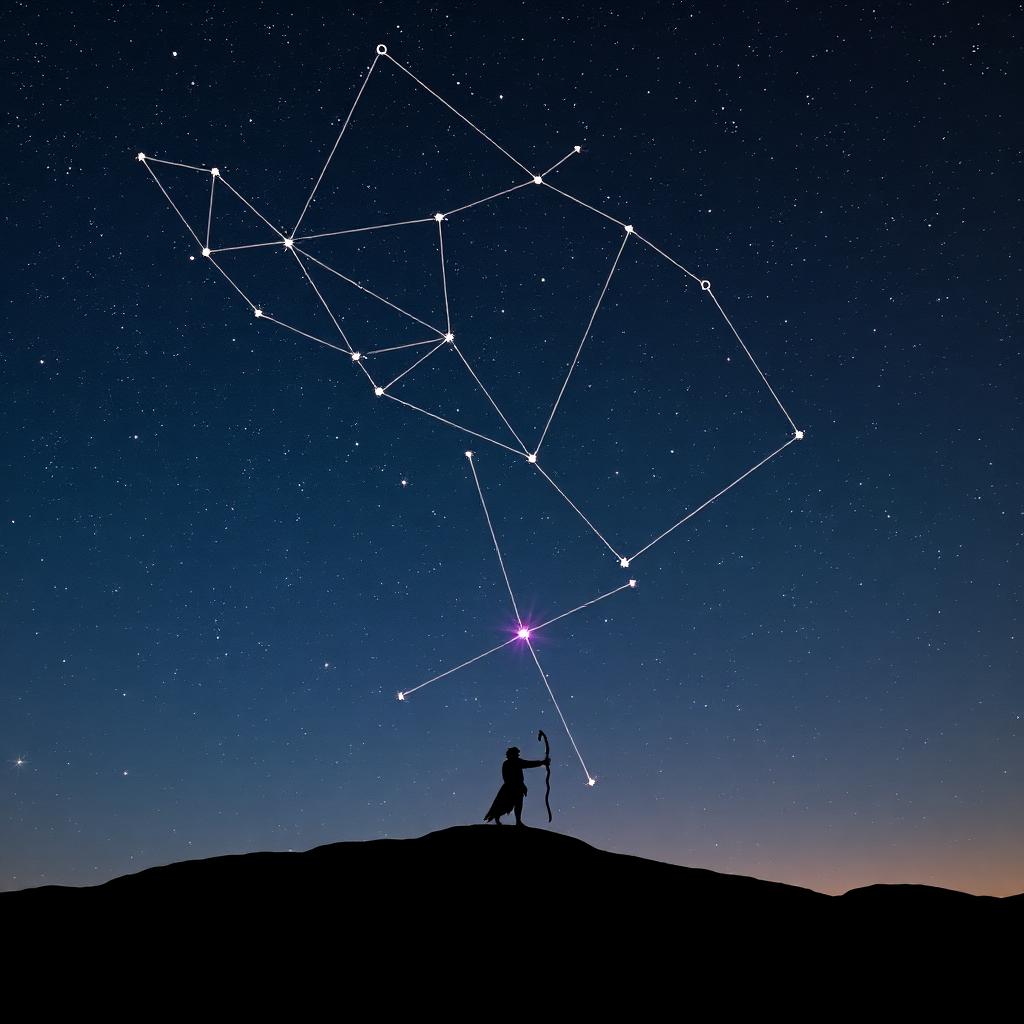
Celestial Coordinates Explained: Right Ascension, Declination and Sidereal Time
Why the sky is mapped in hours instead of degrees, how to work out what is circumpolar from your own latitude, and the one clock that tells you when an object is best placed.
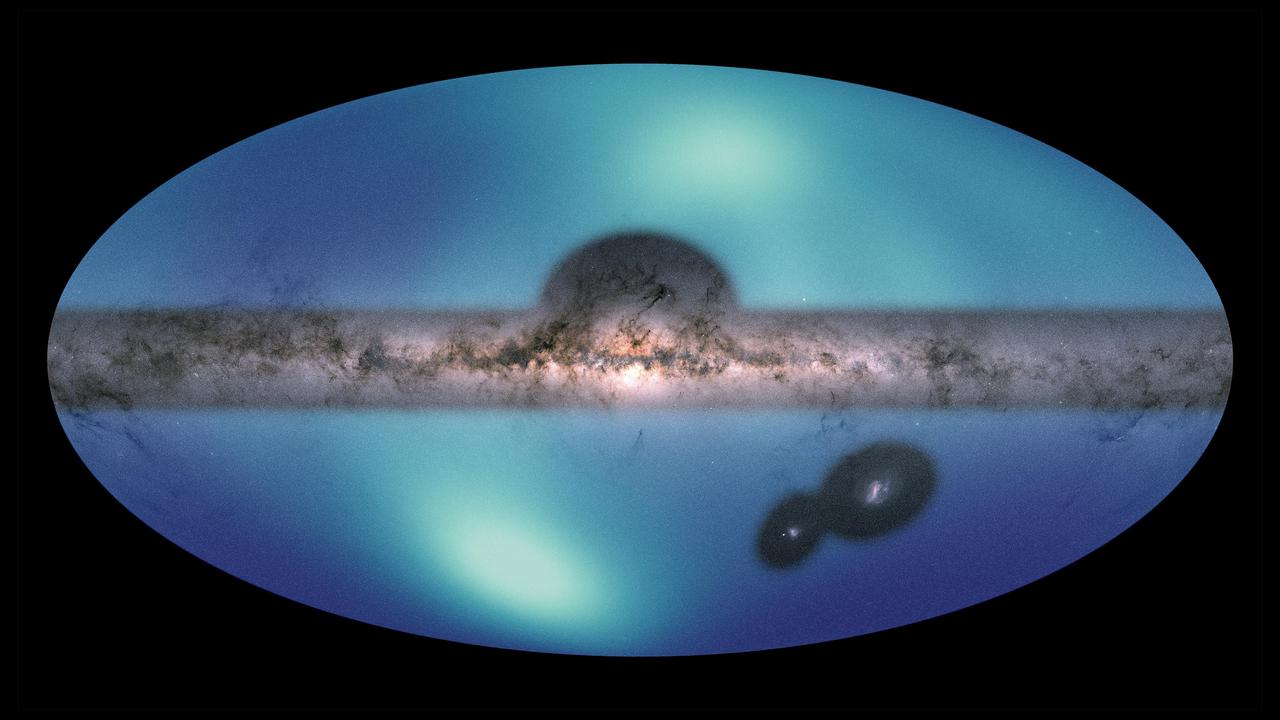
Every beginner eventually hits the same wall. You look up an object, and instead of a helpful description you get something like 18h 36m 56s, +38° 47′ 01″. It looks like a diagnostic code. In fact it is one of the most elegant ideas in observational astronomy, and once it clicks you can locate anything in the sky from any location on any date without needing an app to tell you where to point.
The core insight is simple: imagine the Earth's own latitude and longitude grid inflated outwards until it is painted on the inside of an enormous sphere surrounding us. Stars are then just fixed addresses on that sphere. The grid does not move with the Earth's rotation, which is exactly what makes it useful — the coordinates of Vega are the same tonight as they were when your grandparents were born, whereas its position in your back garden changes minute by minute.
Declination is celestial latitude
Declination, abbreviated Dec, is measured in degrees from the celestial equator, running from +90° at the north celestial pole through 0° at the equator to −90° at the south celestial pole. It behaves exactly like terrestrial latitude, and it is the easier half of the system because it never changes with time of night or time of year. Polaris sits at about +89°, almost precisely at the pole, which is why it barely moves.
Declination becomes immediately practical when you combine it with your own latitude. Whatever passes directly overhead at your site has a declination equal to your latitude — at 40° north, objects at Dec +40° cross your zenith. And an object is circumpolar, meaning it never sets, when its declination exceeds 90° minus your latitude. From 50° north, everything above Dec +40° circles the pole all night. Conversely, anything below Dec −40° never rises for you at all, which is why southern-hemisphere showpieces like Omega Centauri are permanently out of reach from northern Europe.
Right ascension is longitude, measured as a clock
Right ascension, or RA, is the east–west coordinate, and it is quoted in hours, minutes and seconds rather than degrees, which is where most of the confusion originates. The zero point is the vernal equinox, the position of the Sun at the March equinox, and the scale runs eastward through 24 hours before returning to zero. The conversion is simply one hour to fifteen degrees, since twenty-four hours must cover the full three hundred and sixty.
The reason for using time units is entirely pragmatic. The sky rotates past your meridian at fifteen degrees per hour, so if two objects differ by two hours of RA, the second one arrives at your meridian two hours after the first. That is a directly usable observing fact rather than an arithmetic exercise. Once you internalise it, an RA value stops being a label and becomes a schedule.
Sidereal time: the clock that actually matters
Local sidereal time is the single most useful number an observer can know, because LST tells you which right ascension is crossing your meridian at this instant. An object is at its highest and therefore at its best when the LST equals its RA. Plan a session by listing your targets in RA order and you will work across the sky efficiently instead of chasing objects that set while you fiddle. Our Astronomical Time Converter computes LST from your longitude in real time.
Sidereal time runs slightly fast relative to your wristwatch. A sidereal day, the time for the stars to return to the same position, is 23 hours 56 minutes and 4 seconds, about four minutes shorter than a solar day, because the Earth must rotate a little extra each day to bring the Sun back to the meridian while it also moves along its orbit. Those four minutes accumulate to two hours a month and are precisely why the constellations visible in the evening change through the year.
Alt-azimuth, epochs and precession
Alongside the fixed RA and Dec system sits the local one: altitude, the angle above the horizon, and azimuth, the compass bearing. Alt-azimuth coordinates are what your Dobsonian mount and your own body actually use, but they are valid only for one observer at one instant. Both systems are necessary, and converting between them requires knowing your latitude, longitude, and the time — which is exactly what sidereal time supplies.
One final subtlety explains the J2000 you see attached to catalogue positions. The Earth's axis wobbles like a slow spinning top with a period of roughly 26,000 years, dragging the celestial poles and the equinox point with it. This precession shifts all coordinates by about fifty arcseconds a year, so catalogues fix a reference epoch, currently the start of the year 2000. It also means Polaris is only temporarily the pole star: in twelve thousand years that job will belong to Vega, and the coordinate grid your descendants use will be measurably different from yours.